


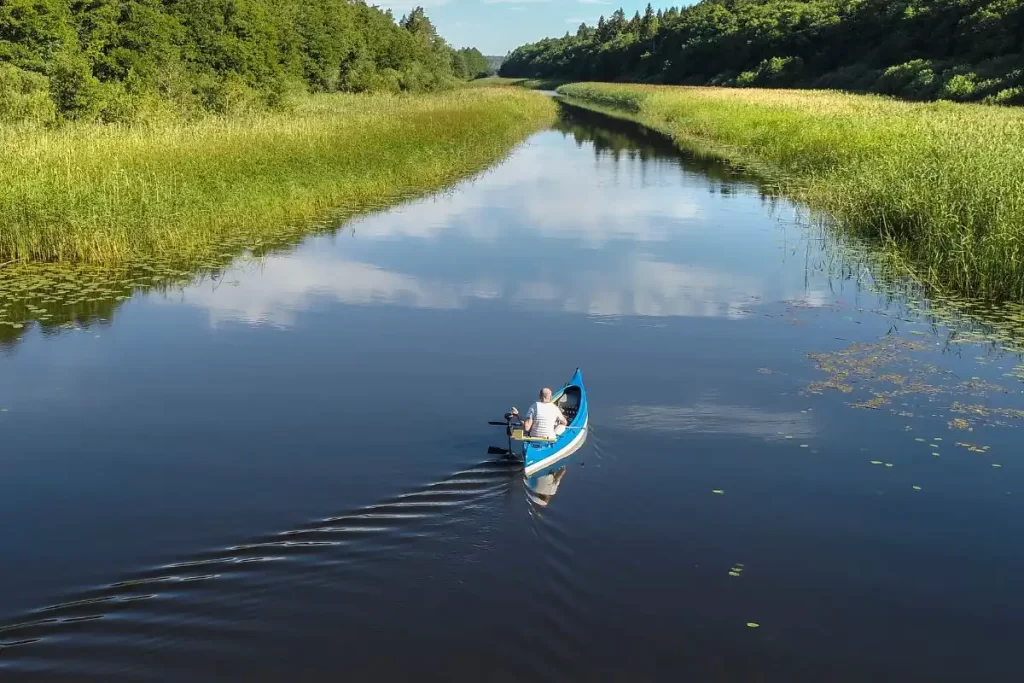
Whether you’re heading out for a morning of fishing, exploring tucked-away coves, or simply soaking up another B.C. day on the water, an electric trolling motor can make a small boat or kayak much more versatile. Around B.C.’s Lower Mainland, that might mean fishing Pitt Lake, exploring Stave Lake, or heading into the sheltered waters of Indian Arm.
What Is an Electric Trolling Motor, and Do You Actually Need One?
How Do Electric Trolling Motors Work?
What is a trolling motor, exactly? It’s a compact electric motor designed for quiet, controlled propulsion and precise manoeuvring. Unlike a gas outboard, it’s not primarily intended for speed.
How do trolling motors work? A rechargeable battery powers an electric motor that turns a propeller. Depending on the model, you control it with a tiller, foot pedal or remote. They’re useful for fishing, navigating shallow water and holding a steady position.
Types of Electric Trolling Motors
Bow-Mount
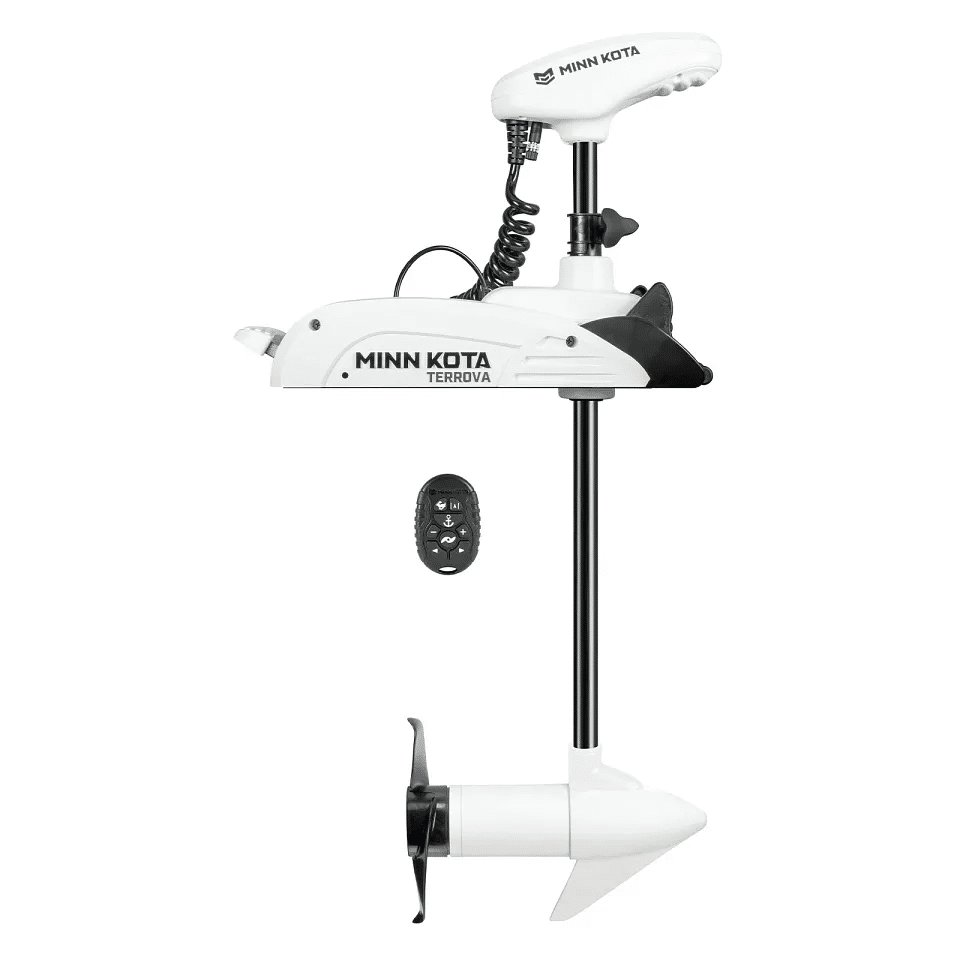
Mounted at the front of the boat, bow-mount motors pull the boat through the water and offer excellent steering control. They’re particularly popular with anglers.
Transom-Mount
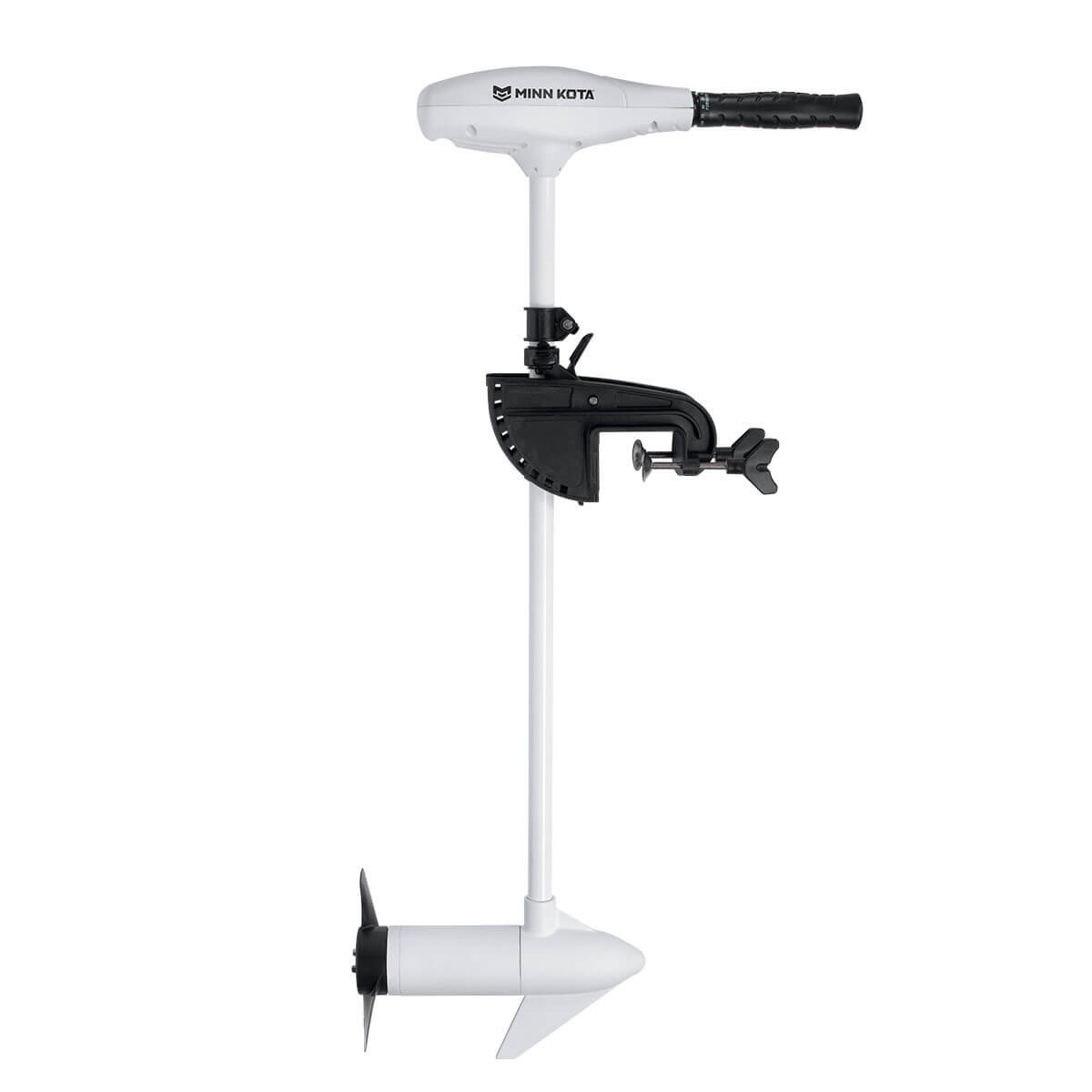
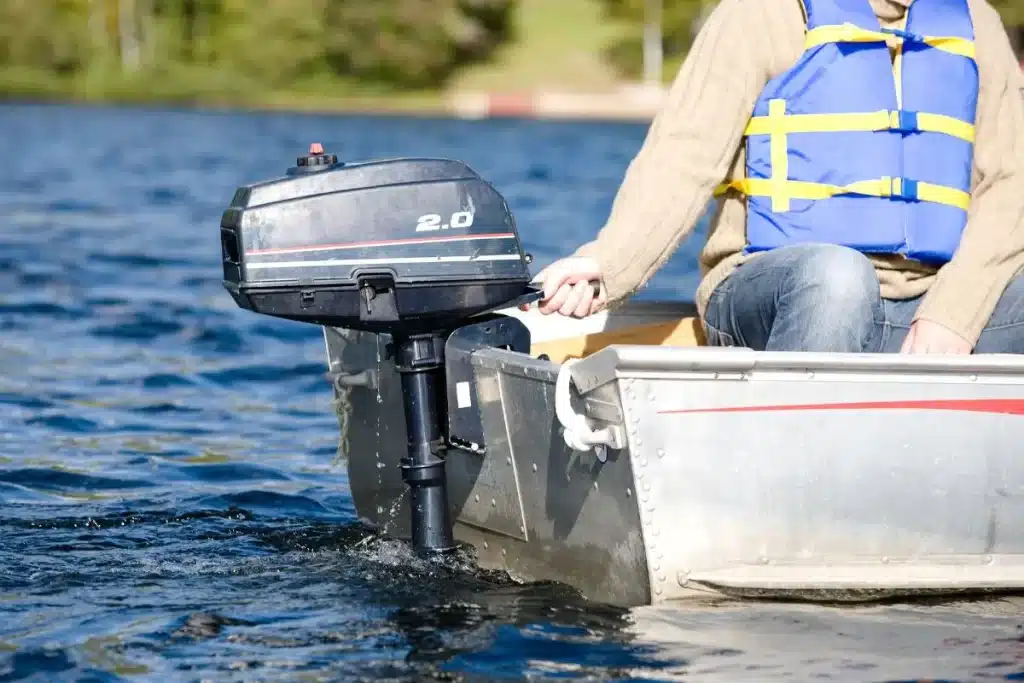
Transom-mounted motors attach to the back of the boat. They’re simple, versatile and well suited to smaller aluminum boats, canoes and fishing boats.
Engine-Mount
Engine-mount motors attach to an existing outboard or propulsion system, keeping the deck clear while providing electric trolling capability.
Which Trolling Motor Size Do You Need?
Thrust is more important than boat length alone. Calculate the weight of your fully loaded boat, including passengers, batteries, equipment and fuel. A useful trolling motor thrust rule of thumb per boat weight is around 2 lb of thrust for every 100 lb of loaded weight. It’s only a starting point, though. Wind, current and hull design can all increase the thrust you need.
As a basic trolling motor size chart:
| Loaded boat weight | Suggested thrust |
| Up to 1,500 lb | 30–40 lb |
| 1,500–2,000 lb | 40–55 lb |
| 2,000–2,500 lb | 55–70 lb |
| 2,500+ lb | 70–100+ lb |
For a 16-foot aluminum boat, 55 lb can work well with a moderate load. If you’re carrying several passengers or regularly dealing with wind and current, consider stepping up to 70 lb or more.
What Trolling Motor Voltage and Battery Bank Do You Need?
Matching Voltage to Thrust and Speed
Common trolling motors use 12V, 24V or 36V systems. Higher voltage allows manufacturers to build motors capable of producing more thrust efficiently.
A 24V motor isn’t necessarily twice as fast as a 12V motor. Voltage is primarily about the power available to the motor, not simply top speed.
Battery Type
Traditional deep-cycle lead-acid batteries are affordable but heavy. AGM batteries are maintenance-free and durable, while lithium batteries are lighter and offer excellent usable capacity. For kayaks and smaller boats, the reduced weight of lithium can be particularly useful.
How To Get the Shaft Length Right The First Time
How to Measure Trolling Motor Shaft Length
Knowing how to measure trolling motor shaft length can save you from buying the wrong motor. This can be done by measuring from the motor’s mounting surface down to the waterline. The propeller needs to remain sufficiently submerged while you’re underway, even when the boat is moving through chop.
The required trolling motor shaft length depends on whether you’re mounting the motor at the bow or transom and the height of that mounting point. If you’re between shaft sizes, choosing the longer option is often preferable, provided it can be stowed properly.
Freshwater or Saltwater Trolling Motor
If you’ll fish both freshwater and saltwater, choose a saltwater-rated motor, as saltwater models are designed with additional corrosion protection.
That’s worth considering for West Coast boaters who might spend one weekend on Pitt Lake and another exploring Indian Arm. A saltwater-rated motor gives you greater flexibility and can also be used in freshwater.
How to choose the right electric trolling motor?
Start with four factors:
- Boat weight: Include passengers and equipment.
- Mounting location: Decide between bow, transom and engine mount.
- Shaft length: Measure carefully before purchasing.
- Water conditions: Wind, current, and saltwater exposure affect your choice.
When in doubt, slightly over-specifying your motor is generally better than choosing one that constantly operates at its limit.
Rules and Regulations to Check Before You Buy
Lake-Specific Restrictions
Don’t assume that an electric motor is automatically permitted on a lake where gas motors are prohibited. Restrictions vary by waterbody, and some B.C. waters prohibit powered boats entirely while others permit electric motors. Always check the current regulations for the specific lake before launching.
Vessel Licensing
In Canada, recreational boat operators generally need proof of competency, such as a Pleasure Craft Operator Card, when operating a pleasure craft with a motor. A Pleasure Craft Licence is generally required when the vessel has an engine power of at least 10 hp (7.5 kW).
Tidal-Water Fishing
Fishing regulations also depend on where you’re fishing. B.C. tidal waters require a tidal-water sport fishing licence, while freshwater fishing is governed by B.C.’s freshwater regulations.
FAQs
Do I need a licence to run an electric trolling motor in BC?
You generally need proof of competency to operate a recreational pleasure craft with a motor. Whether the boat itself requires a Pleasure Craft Licence depends on its engine power and other requirements.
Can I use a trolling motor on lakes near Vancouver that ban gas motors?
Sometimes. Some lakes allow electric motors while prohibiting gas-powered boats. Others prohibit powered vessels altogether. Check the rules for the specific lake before you launch.
What size trolling motor do I need for a 16-foot aluminum boat?
A 55 lb thrust motor is a reasonable starting point for many lightly loaded 16-foot aluminum boats. Heavier loads or challenging conditions may call for 70 lb or more.
Do I need saltwater or freshwater if I fish both Indian Arm and Pitt Lake?
Choose a saltwater-rated motor. It provides the corrosion protection needed for Indian Arm while remaining suitable for freshwater use on Pitt Lake.
How long will a trolling motor battery last on the water?
Runtime depends on battery capacity, motor draw, speed, wind, current and load. Running at lower speeds generally provides significantly longer runtime.
How long will a 100Ah battery last with a 30 lb thrust trolling motor?
It depends on the motor’s actual current draw. For example, a continuous 30A draw would theoretically provide about 3.3 hours from a 100Ah battery, before accounting for real-world efficiency and battery limitations.
How big of a boat will a 55 lb trolling motor push?
It depends more on total loaded weight than boat length. A 55 lb motor is commonly appropriate for smaller fishing boats, but always compare your loaded weight with the manufacturer’s recommendations.
Should I get a 12V or 24V trolling motor?
For smaller boats and moderate use, 12V is often enough. Choose 24V if you need greater thrust or regularly operate a heavier boat.
How fast will a kayak go with a 30 lb thrust trolling motor?
Many motorized fishing kayaks can reach roughly 3 to 5 mph in favourable conditions. Hull design, load, battery and water conditions all affect “how fast does a trolling motor go?”
Do I have to register my kayak if I put a trolling motor on it?
Not necessarily, a Pleasure Craft Licence is generally required at 10 hp (7.5 kW) or more, but operator competency requirements can still apply to motorized kayaks below that threshold. Check the current Transport Canada requirements before heading out.