


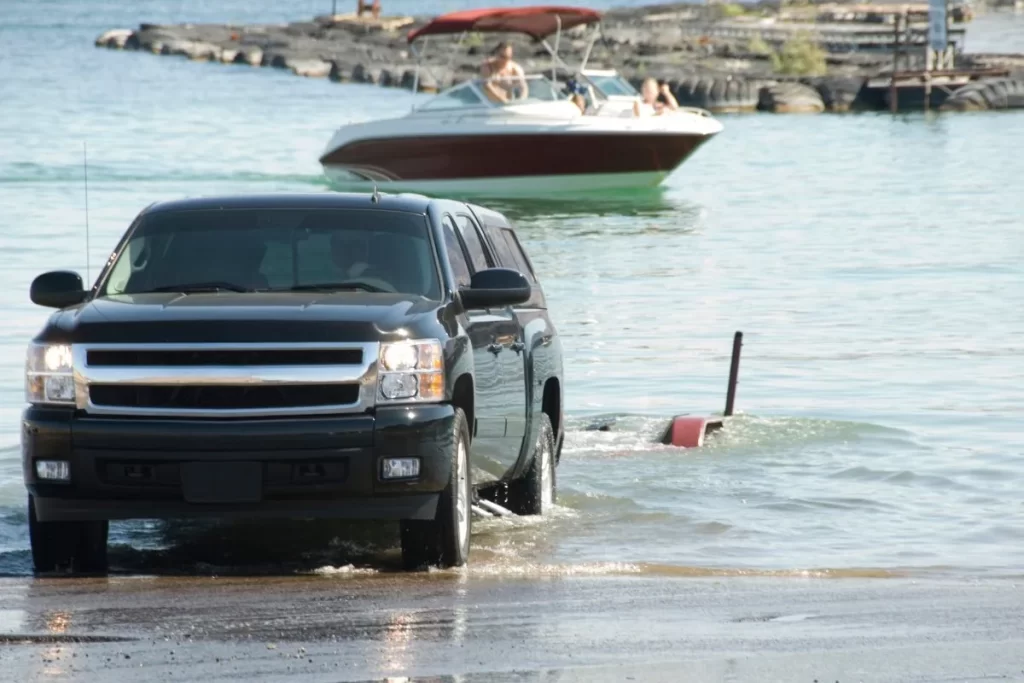
Launching a boat for the first time is an exciting experience, but it can also feel a little intimidating, especially when you’re at a busy ramp with a line of boaters waiting behind you. This is why knowing what to expect and preparing ahead of time can make the process much smoother. While some people are fortunate enough to have a seasoned set of hands to help out, not everyone is as lucky, so the good news is that with a little practice, launching your boat quickly becomes a straightforward part of getting out on the water. Whether you’re heading out from Port Moody, Coquitlam or Pitt Meadow, if you’re launching a boat for the first time, this guide covers how to launch a boat for beginners, what to bring, and how to avoid becoming that person who’s just blocking the ramp.
Boat Checklist Before Launching
The best time to prepare for your launch is before you arrive at the ramp. In other words, not in the parking lot, and hopefully following a well prepped list the day before.
Use our boat checklist before heading out and launching:
- Check the boat, trailer, tires, lights and wheel bearings (we recommend doing a big inspection before boating season, but as an added measure, each time you decide to take your boat out).
- Make sure the winch strap and safety chains are secure.
- Check your fuel level and battery.
- Load your required safety equipment.
- Bring lifejackets/PFDs for everyone on board.
- Pack your phone, keys, food, water and emergency supplies.
- Remove the transom straps only when you’re ready to launch.
- Check the weather, water conditions and your planned route.
- Make sure you have the required documents and operator competency card.
- Confirm the launch is open and check any local parking or launch fees.
Do as much as possible at home or in a staging area. The goal is to arrive at the ramp ready to launch the boat trailer and go, not unpack half your garage beside the water while others wait on your schedule.
Boat Launching Regulations and Licenses
Before boat launching in B.C., it’s important to know the difference between your operator requirements and your boat’s requirements. For those operating a motorized recreational boat in Canada, you need proof of competency, a Pleasure Craft Operator Card (PCOC). This card demonstrates that you understand basic boating safety and is required even when a motor is not currently running. Additionally, your boat may also require a Pleasure Craft Licence. Recreational vessels with one or more engines totalling at least 10 horsepower (7.5 kW) require one when principally operated and maintained in Canadian waters. The best way to ensure you’re prepared is to check current Transport Canada requirements for your particular vessel before heading out.
Why Your Drain Plug Should Be OUT on the Drive Over
The drain plug should be out while your boat is being transported, as B.C. law requires boats and water-related equipment in transit on land to have drainage holes, valves or other drainage devices left open or unplugged, unless the boat is transported inverted and fully drained. Moreover, a good habit is to put the drain plug somewhere obvious, such as in the cup holder or ignition area, so you don’t forget to put it back in when you arrive.
BC’s Invasive Mussel Law
B.C. takes aquatic invasive species very seriously. The province’s Clean, Drain, Dry program asks boaters to remove mud, plants and debris, drain all water from the boat and equipment, and allow everything to dry before entering another body of water. So, if you’re transporting a watercraft through B.C., you must stop at open invasive-mussel inspection stations along your route, as failure to do so can result in a $690 fine.
Are you coming into B.C. from another province or state? Consider contacting the provincial invasive-species program before launching if your boat may be considered high risk.
What Gear and Equipment Should Every Boat Have Before Launching
Your exact equipment checklist is entirely dependent on the type of boat you’re operating, its size and the activities you do out on the water. At minimum, make sure you have the required Canadian safety equipment, including appropriate PFDs/lifejackets, communication equipment, and emergency gear for your vessel.
However, there are many other items that will make your day more enjoyable and that are smart to have on hand:
- A first-aid kit
- A throwable flotation device
- Anchor and rode
- Spare line
- Bilge pump
- Paddle or other backup propulsion
- Fire extinguisher
- Navigation lights
- Tool kit and spare fuses
- Drinking water
- Sun protection and warm layers
- Waterproof storage for phones and documents
Before leaving home, ask yourself: “If the engine quits right now, what do I have to do to get myself and everyone else safely back?”
Where to Launch Your Boat, Find Your Local Ramps
Greater Vancouver has plenty of places to get on the water, with each launching spot having unique challenges.
Listed below are three local options:
Rocky Point (Port Moody)
Rocky Point Park is a convenient option for boaters on the Tri-Cities side of Metro Vancouver. The Rocky Point Boat Launch is at 2790 Esplanade Avenue and operates daily from dawn to dusk with a boat launch pass. The City recommends arriving early because parking can fill quickly during summer. Since this is a popular spot, have your boat ready before you get onto the ramp.
Maquabeak Park (Fraser River, Coquitlam)
Maquabeak Park at 5 Burbidge Street sits along the Fraser River and offers a free boat launch, fishing access and trailer parking. The dock is heavily used by recreational boaters, and because river conditions and traffic can differ from lake boating, we recommend that launchers take extra care when planning to use this spot.
Grant Narrows (Pitt Lake, Pitt Meadows)
Grant Narrows is a popular gateway to Pitt Lake and the surrounding Pitt-Addington Marsh channel system. A public, picturesque boat launch with a recreational launch point, lots of parking, and the park open from dawn until dusk. Please note that Pitt Lake can also bring changing wind, water and tidal conditions, so check conditions before heading out. Grant Narrows is a beautiful launch, but “beautiful” and “predictable” are not always the same thing.
Ramp Etiquette 101
If you’re wondering which of the following is the proper boat launch etiquette, the answer is the one that keeps the line moving without putting anyone at risk.
Here are some things to consider:
- Stage your boat before backing onto the ramp.
- Remove straps and covers in the designated preparation area.
- Have your keys, drain plug and safety gear ready.
- Back down efficiently.
- Once launched, move your boat and vehicle away from the ramp promptly.
- Don’t tie up at the courtesy dock while you unload half the family picnic.
- If someone is clearly struggling, offer help rather than commentary.
- Be patient. Everyone was a beginner once.
Steps For Launching a Boat From a Trailer
Here are the basic steps for launching a boat from a trailer.
At the Top of the Ramp
Remember to do your final checks before backing down. This includes removing the transom straps, confirming the drain plug is ready to go in, and making sure your boat is secured to the winch until you’re positioned for launch. Additionally, if you have a helper, agree on simple hand signals before you start.
Backing Down
Back down slowly and straight by using your mirrors, and keep the trailer wheels aligned with the ramp. If you’re new to reversing a trailer, practice in an empty parking lot first.
In the Water
Back the trailer in until the boat begins to float and then set the parking brake. Next, follow your boat manufacturer’s launching procedure and use the winch and lines appropriately. Once the boat is safely floating, it’s time to unhook. Lastly, park your tow vehicle and trailer where permitted.
Keep in mind that the exact point at which your boat floats depends on the trailer, ramp angle and boat design, so don’t blindly follow someone else’s distance.
The Post-Launch Float Checklist
You’re finally on the water. Before you blast away toward Indian Arm or Pitt Lake, pause for one final check and ask yourself:
- Is my drain plug installed?
- Is my engine properly lowered and ready?
- Have I checked my bilge?
- Are my fuel and battery systems operating normally?
- Does everyone have their PFD/lifejacket?
- Are my navigation lights ready if needed?
- Is my gear secure?
- What is the expected weather and route?
- Does everyone know the basic plan?
Now you can enjoy the good stuff: fresh air, mountain views and that satisfying feeling of having successfully conquered your first launch.
FAQs
Which of the following is proper boat launch etiquette?
Prepare your boat away from the ramp, launch efficiently, and move your vehicle out of the launching area promptly to be considerate of other boaters.
When does boating season start in the Lower Mainland?
There isn’t one official start date for the recreational boating season. In the Lower Mainland, many boaters get back on the water in spring, once weather, water and local launch conditions improve. If you’re asking, “When does the boating season start?” The practical answer is: whenever you’re prepared for the conditions, not simply when the calendar says spring has arrived.
Do you need a licence to launch a boat in BC?
You need a Pleasure Craft Licence for the boat, and you need proof of competency, such as a PCOC, to operate a motorized recreational boat.
What’s the first thing you should do before launching a boat?
Complete your preparation before reaching the ramp. Your boat checklist before launching should cover safety equipment, straps, battery, fuel, weather, documents and the drain plug.
How do you launch a boat by yourself?
It’s possible with the right setup, but take it slowly. Prepare everything beforehand, back down carefully, secure the boat with a bow line, and follow your trailer and boat manufacturer’s recommended procedure. If conditions are busy, windy or unfamiliar, having another person with you is the safer choice.
Where are the best places to launch a boat in BC?
That depends on where you live and what kind of boating you enjoy. Around Greater Vancouver, Rocky Point, Maquabeak Park and Grant Narrows are useful local options, while destinations farther afield open up countless lakes, rivers and coastal areas.
What do I need as a first-time boat owner?
Start with the essentials: a properly maintained boat and trailer, required safety equipment, PCOC/proof of competency, appropriate licensing, basic boating knowledge and a solid boat launch checklist. Practice launching before your first busy summer weekend.
What is the number one unspoken rule on a boat?
Be considerate. Share the water, respect other boaters, follow posted restrictions and leave your launch area cleaner than you found it.
What not to bring on a boat?
Avoid unnecessary clutter, unsecured objects and anything you don’t need. Space is limited on most boats, so prioritize safety gear, water, weather-appropriate clothing, communication equipment and essentials. And if something can easily fly overboard, secure it before the boat leaves the dock.