

Description
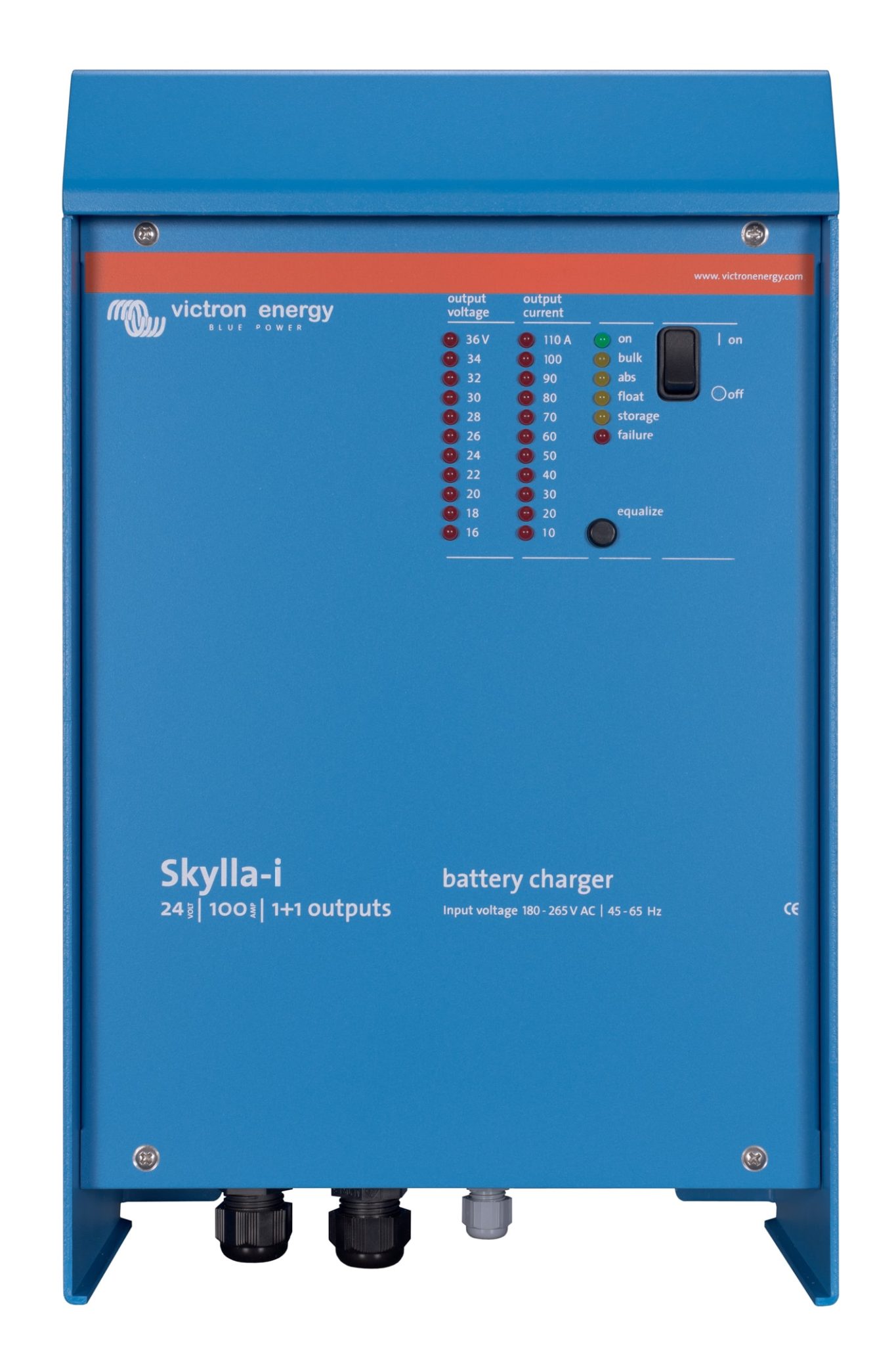
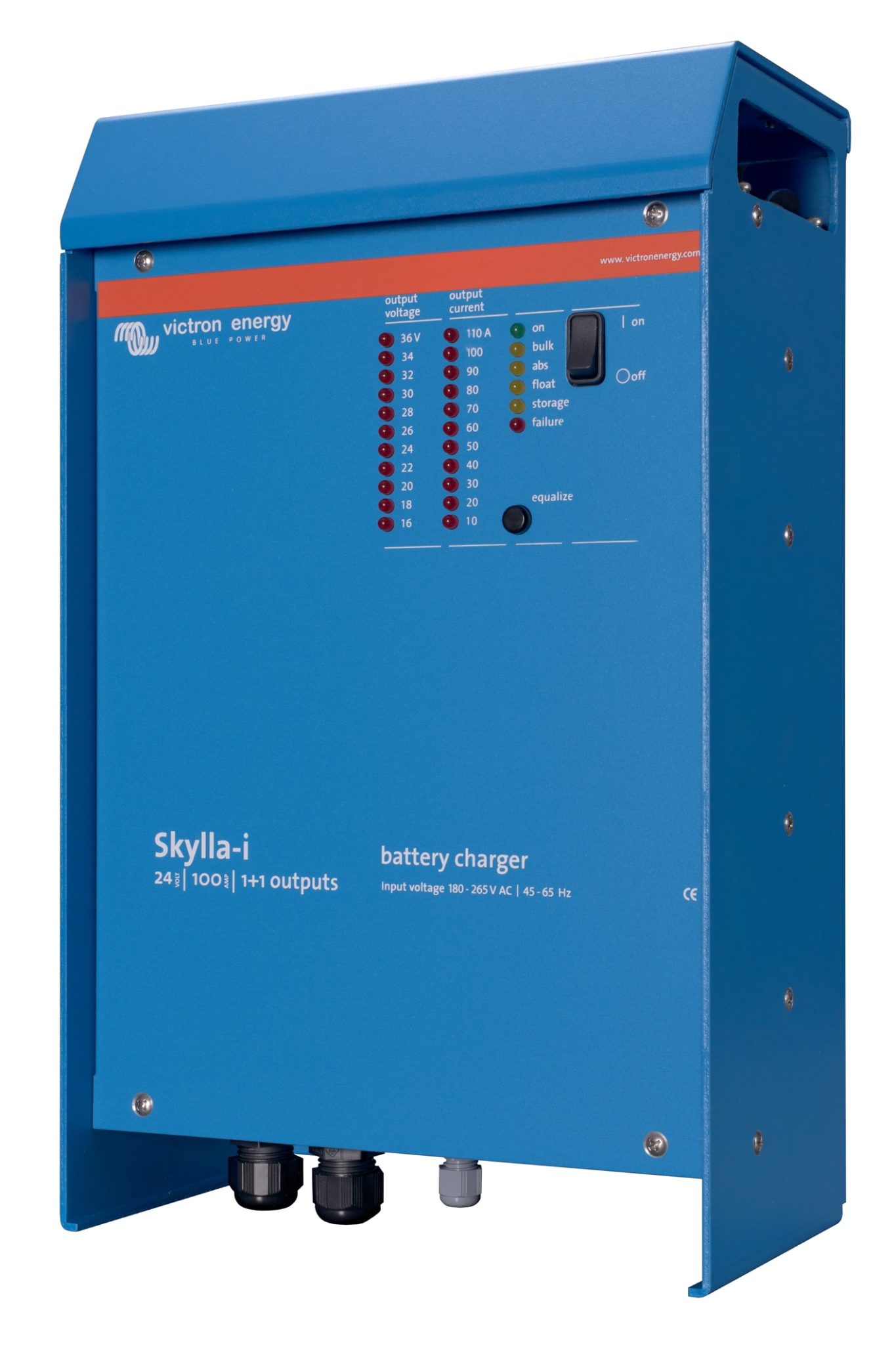
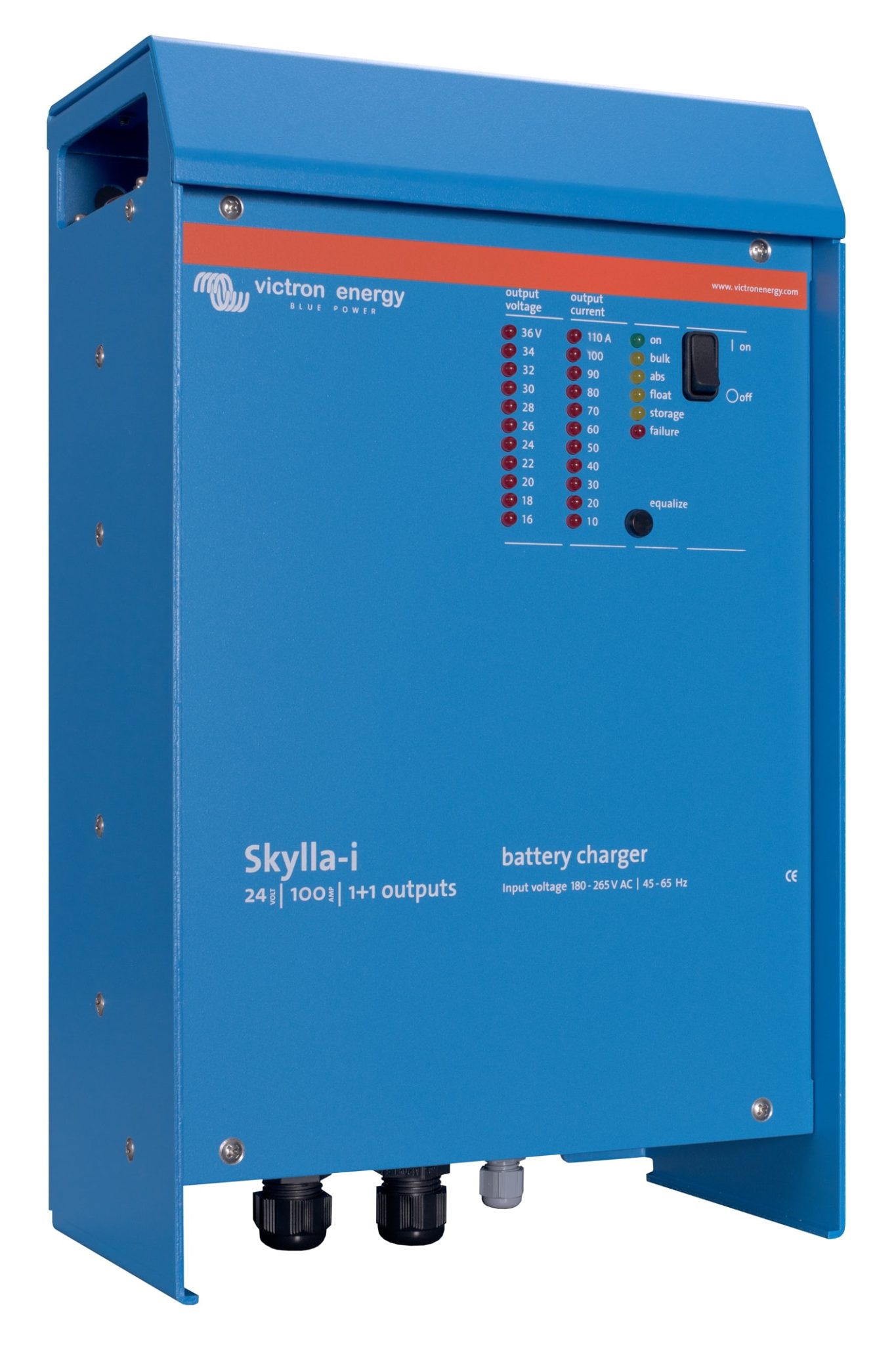
Victron Skylla-i 24/100(1+1) is a 230 VAC battery charger with a 24 VDC output and two isolated outputs, so it can charge two battery banks. The second output is limited to approximately 4 A and is meant to top up a starter battery. It accepts AC or DC supply.
Features
- Two isolated outputs; the second runs at a slightly lower output voltage for a starter battery.
- Aluminum cases with epoxy powder coating, a drip shield and stainless steel fixings. Victron says these withstand heat, humidity and salt air.
- Circuit boards have an acrylic coating for corrosion resistance.
- CAN bus (NMEA2000) interface, plus a rotary switch, DIP switches and potentiometers to adjust the charge algorithm; several chargers can be synchronized over it with RJ45 UTP cables.
- Variable absorption time: kept short after shallow discharges and lengthened after a deep discharge.
- BatterySafe mode limits the rate of voltage increase once gassing voltage is reached.
- Comes with a battery temperature sensor; charge voltage drops as battery temperature rises.
- Battery voltage sense offsets the voltage loss caused by cable resistance.
Specifications
| Part number | SKI024100000 |
| Model | Skylla-i 24/100(1+1) |
| Brand | Victron Energy |
| Output voltage | 24 VDC |
| Charger output amps | 100 |
| Charging banks | 1+1 |
| Second output | approximately 4 A |
| AC input voltage | 230 VAC |
| Input voltage | 185-265 |
| Communication | CAN bus (NMEA2000) |
| Case | Aluminum, epoxy powder coated |
| Fixings | Stainless steel |
| Portable | No |
Compatibility
Victron lists this charger as Li-Ion (LiFePO4) ready. Simple on-off control can come from a relay or open collector output on a Li-Ion BMS connected to the remote control port. Complete voltage and current control is possible through the galvanically isolated CAN bus port.