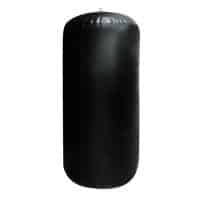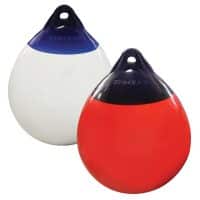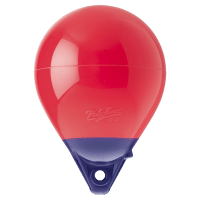


Boat Buoys and Fenders
Navigating a crowded BC marina during a strong ebb tide demands skill and the right gear. Your boat’s hull is exposed to hazards from docks, pilings, and other boats. Our premium boat buoys and fenders serve as your first line of defense, providing critical dock protection to prevent costly scratches, gouges, and damage. As trusted BC marine specialists, Poco Marine offers durable polyform boat fenders, mooring buoys, and accessories built to endure Pacific Northwest saltwater and protect your investment, whether you’re docking for a day or mooring for winter.
(more...)Key Benefits for Your Boat
- Protect Your Investment: Shield your hull from unforgiving concrete docks, rough pilings, and unexpected bumps, preserving your boat’s condition and resale value.
- Dock with Confidence: Eliminate the stress of docking in strong currents or gusty winds, knowing your boat has the best protection.
- Prevent Costly Repairs: Avoid expensive gelcoat and fiberglass repairs by investing in reliable boat buoy bumpers and boat docking fenders.
- Secure Rafting: Raft up with friends in popular anchorages like Desolation Sound or the Gulf Islands without worrying about hull-to-hull damage.
Common Uses on the BC Coast
Whether you’re a coastal cruiser, a dedicated angler, or a weekend sailor, proper fendering is non-negotiable in our challenging waters. Our products are essential for:
- Transient Moorage: Safely securing your vessel at unfamiliar guest docks from Victoria’s Inner Harbour to Prince Rupert.
- Rafting in Coves: Protecting your hull when rafted up with other boats in the sheltered bays of the Broughton Archipelago.
- Fishing Near Structure: Using docking buoys to mark locations or mooring fenders for boats to protect your topsides when tied to commercial docks in Ucluelet or Tofino.
- Lock Transits: Guarding against rough concrete walls when navigating locks.
Choosing the Right Fenders for BC Waters
Selecting the right fender depends on your boat’s size and how you use it. Here’s a quick guide to making the right choice for our local conditions.
Key Fender Types:
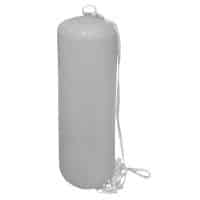
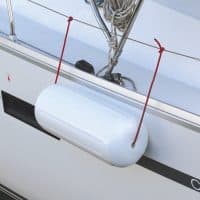
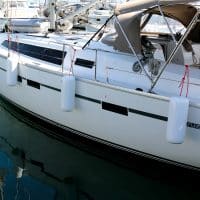
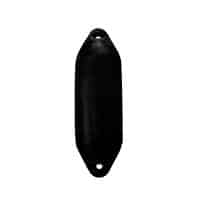
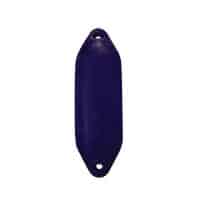
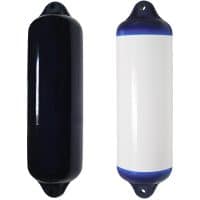
- Cylindrical Fenders: The standard choice. Polyform G-Series suits smaller vessels in protected marinas. F-Series provides heavy-duty protection for larger boats and exposed moorings.
- Round Fenders: For vessels with hull flares, such as trawlers, these provide a large contact area to prevent bow or stern swing at the dock.
- Inflatable Fenders: The space-saving choice for cruisers and sailboats. Perfect for trips to places like the Gulf Islands, where storage is tight. They protect well and deflate for easy storage.
Practical Advice for BC Boaters:
- Sizing Rule: Start with a cylindrical fender about 1 inch in diameter for every 4 to 5 feet of your boat’s length. Size up for rough or unprotected docks. You can check our boat fender sizing chart for details.
Boat Fender Sizing Chart
| Boat Length (feet) | Cylindrical Fender Diameter (inches) | Round Fender Diameter (inches) | Recommended Fender Types |
| Under 10 | 3 | — | Cylindrical Double-Eye, Hybrid, Small Flat Fenders |
| 10 – 15 | 3 – 4 | 9 | Cylindrical Double-Eye, Hybrid, Small Flat Fenders |
| 15 – 20 | 5 – 5.5 | 12 | Cylindrical Double-Eye, Center Hole, Hybrid, Small Flat Fenders |
| 20 – 25 | 6 – 6.5 | 15 | Cylindrical Double-Eye, Center Hole, Hybrid, Round, Medium Flat Fenders |
| 25 – 35 | 8 – 8.5 | 18 | Cylindrical Double-Eye, Center Hole, Hybrid, Round, Medium Flat Fenders |
| 35 – 50 | 10.5 – 12 | 21 | Hybrid, Center Hole, Round, Large Flat Fenders |
| 50 – 60 | 12 | 27 | Hybrid, Center Hole, Round, Large Flat Fenders |
| 60 – 72 | 15″ – 24 | 27 | Hybrid, Center Hole, Round, Large Flat Fenders |
| 72 + | 24 – 32 | 34 | Hybrid, Round |
- How Many? Use at least three fenders per side: one at the beam, one fore, and one aft. More is better, especially when rafting.
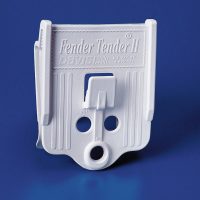
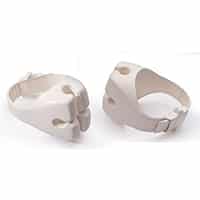
- Use Fender Clips: Clip-on fender holders make rapid height adjustment easy and essential for BC’s tidal ranges and dock heights.
What are Boat Buoys?
Buoys serve two primary purposes for recreational boaters: mooring and navigation. Distinguishing between these uses is essential for safe boating.
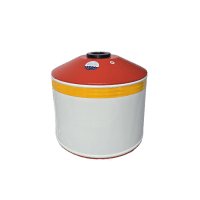
- Mooring Buoys: These are used to secure your vessel in a fixed location and provide a safe and stable alternative to anchoring. In Canada, a private mooring buoy must be white with an orange top and display the letters “PRIV” and the owner’s name and contact information. These are common in marine parks and designated anchorages throughout British Columbia’s coastal waters.
- Navigational & Special Purpose Buoys: These floating markers serve as guides on the water, relaying essential information for safe navigation. The most common types are:
- Information Buoys (Orange Square): Provide details on location, nearby facilities, and other non-regulatory information.
- Hazard Buoys (Orange Diamond): Warn of dangers like rocks, shoals, or other underwater obstructions. Proceed with caution.
- Control Buoys (Orange Circle): Indicate speed limits or wake restrictions. You must obey the rule posted within the circle.
- Keep-Out Buoys (Crossed Orange Diamond): Mark areas where boats are prohibited, such as near dams or swimming areas.
FAQs
What size Polyform fenders do I need for my 28-foot cruiser in BC?
For a 28-foot cruiser in BC, choose Polyform G5 or HTM-2 fenders. The rule is 1 inch of fender diameter for every 4-5 feet of boat length. The G-5 (8.8″ diameter) suits most protected marinas. The HTM-2 (8.5″ diameter) works well everywhere and can hang horizontally against pilings. Select an F-3 or F-4 fender for rough or exposed moorings for additional protection.
What is the real difference between Polyform G-Series and F-Series fenders?
G-Series fenders are versatile for recreational boats in protected marinas. F-Series fenders are sturdier, made for challenging and exposed conditions. F-Series has reinforced ropeholds and thicker walls, so choose them for larger boats, unprotected docks, or maximum hull protection on BC’s coast.
How do I use fender clips, and how high should I hang my boat fenders?
Clip the fender onto your boat’s rail, then run the fender line through its cleat. For floating docks in BC, hang fenders so the bottom clears the water. Adjust the fender’s height with the tide for fixed docks to keep it at your boat’s widest point relative to the dock. Using clips makes this height adjustment faster and easier.
What kind of mooring buoy is best for surviving a winter storm on the BC coast?
Use a hard-shell mooring buoy filled with closed-cell foam to handle BC’s stormy winters. This buoy remains afloat even if punctured, since the foam keeps it buoyant. If you leave your boat exposed during winter storms, foam-filled buoys are more reliable than inflatable ones.
How many fenders do I really need for my boat?
Use one fender for every 10 feet of waterline, with a minimum of three. For a 30-foot boat, have at least three fenders per side. In rough conditions, carrying extras protects your hull.
What’s the best way to stop fenders from scuffing my hull?
Fender scuffs, especially on dark-coloured hulls, are typical. Use soft, UV-resistant fender covers (often called “Fenda-Sox”) to create a non-abrasive barrier between the fender and your gelcoat. Remove and rinse covers regularly with fresh water to prevent the accumulation of salt and grit, which can be abrasive.
What do the most common marker buoys in BC mean?
In BC waters, you’ll frequently see white buoys with orange symbols. These are special-purpose buoys that provide key information:
- An orange square provides information, like directions or marina locations.
- An orange diamond warns of a hazard, like rocks or a shoal.
- An orange circle indicates a controlled area with rules, such as “No Wake” or a speed limit.
A crossed diamond means keep out; the area is closed to boats.
When should I replace my boat fenders?
Replace your fender when it shows signs of physical damage, such as cracks or punctures, no longer holds air, feels soft, or has become brittle and faded due to sun exposure.
How long do boat buoys last?
The lifespan of a boat buoy varies; a high-quality buoy body can last 10-20 years, but its mooring hardware, such as chains and shackles, often requires replacement every 2-5 years due to corrosion and wear in the marine environment.
Showing 1–20 of 41 results
-

Attwood Softside Dock Fender 45″
Price range: $30.83 USD through $114.69 USD Select options This product has multiple variants. The options may be chosen on the product page -
Sale!
Boat Mate DriftMate Inflatable Dock Fender 5′
Original price was: $179.43 USD.$157.89 USDCurrent price is: $157.89 USD. Add to cart -
Sale!
Boat Mate Inflatable Dock Fender 10′ with Pump
Original price was: $322.93 USD.$247.60 USDCurrent price is: $247.60 USD. Add to cart -
Davis Fender Tender II Boat Fender Clip
$10.73 USD Add to cart -
Enviro Float Mooring Buoys-Transport Canada Approved
$322.93 USD Select options This product has multiple variants. The options may be chosen on the product page -
OCEAN Clip-on Lifebuoy Support, for Rail Ø63/64 – 1-7/64” (25-28mm), White
$90.11 USD Add to cart -
OCEAN EASYSTORE PLUS Inflatable Yacht Fender
Price range: $51.53 USD through $307.57 USD Select options This product has multiple variants. The options may be chosen on the product page -
OCEAN Fender RT1, 6-19/64 x 15-35/64”(16×39,5cm), white
$59.53 USD Add to cart -
OCEAN Fender RT2, 8-15/32 x 20-15/32”(21,5x52cm), white
$96.85 USD Add to cart -
OCEAN Fender RT3, 10-7/16 x 26-31/32” (26,5×68,5cm), white
$160.38 USD Add to cart -
OCEAN Fender Utility U0, 3-15/16 x 12-63/64”(10x33cm)
$11.22 USD Add to cart -
OCEAN Fender Utility U1, 4-23/32 x 15-3/4”(12x40cm)
$13.78 USD Add to cart -
OCEAN Fender Utility U2, 5-33/64 x 19-11/16”(14x50cm)
$21.96 USD Add to cart -
OCEAN Fender Utility U3, 6-19/64 x 22-3/64”(16x56cm)
$27.59 USD Add to cart -
OCEAN Fender Utility U4, 7-31/64 x 25-13/64”(19x64cm)
$40.88 USD Add to cart -
OCEAN Fender Utility U5, 8-21/32 x 25-13/64”(22x64cm)
$46.00 USD Add to cart -
OCEAN H SERIES Heavy Duty Fenders – H1 to H 10
Price range: $35.89 USD through $327.61 USD Select options This product has multiple variants. The options may be chosen on the product page -
OCEAN Inflatable Fender MAGNUS, Black, 16-17/32 x 51-31/32”(42x132cm)
$429.90 USD Add to cart -
OCEAN R Series Buoys
Price range: $34.80 USD through $503.77 USD Select options This product has multiple variants. The options may be chosen on the product page -
Polyform A-0 Buoy 8″ Diameter
$35.88 USD Select options This product has multiple variants. The options may be chosen on the product page